
Audience & Market Strategy
Soccer Player Recognition Across Markets
What audience research tells brands about soccer fame, age differences and the limits of a global player ranking.
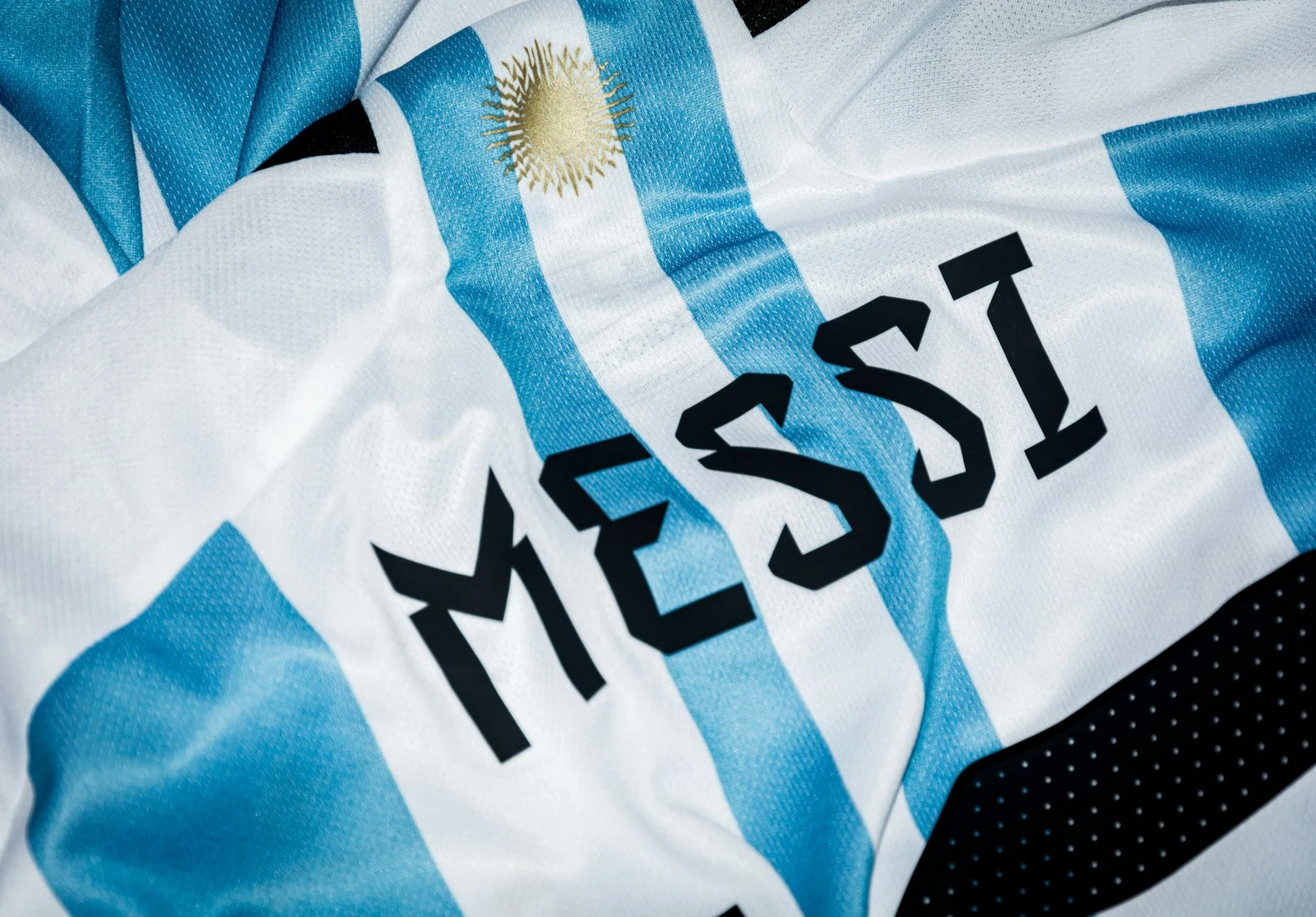
A soccer player can be familiar to almost everyone in a campaign meeting and unfamiliar to many of the people the campaign is supposed to reach. That gap matters when a brand pays for a face, a name or a story to carry its message.
The useful question is specific: which player will this audience recognize, how do they feel about that player, and does the association help explain the offer? An international reputation is a starting point for that decision, not the answer.
This article examines selected men's soccer players using published audience research. The evidence supports comparisons in particular countries and periods. It does not support a single current ranking across North America, South America, Europe and Asia, or a complete country-by-age ranking of ten players.
Recognition, preference and influence answer different questions
Name awareness asks whether someone has heard of a player. Unaided recall asks whom they can name without a prompt. Visual recognition tests whether they can identify a face. Favorability measures opinion; a favorite-player question measures preference within the choices or response format offered.
For a billboard, visual recognition may be essential. For a narrated film, the name and story can supply context. For a campaign intended to change consideration of a product, recognition alone leaves the central question unanswered: does the association improve the audience's response to the brand?
Social followers, search interest and shirt sales can help describe attention or behavior. None can be substituted directly for the percentage of a population that recognizes a player. A person may know a name without following its account, and a follower may live outside the campaign market.
The same names have different reach in the U.S. and Britain
YouGov's third-quarter 2026 public Ratings tables show a substantial difference in reported name awareness between U.S. and British adults. Below is a selected comparison, not the complete ranking. “Fame” is YouGov's measure of having heard of a person.
| Player | U.S. name awareness | British name awareness |
|---|---|---|
| Lionel Messi | 73% | 88% |
| Cristiano Ronaldo | 70% | 93% |
| Erling Haaland | 48% | 74% |
| Kylian Mbappé | 46% | 63% |
| Jude Bellingham | 45% | 79% |
| Mohamed Salah | 43% | 68% |
Source: YouGov plc, 2026, © All rights reserved. U.S. Ratings and British Ratings, Q3 2026. These are adult-population measures, not soccer-fan-only results or tests of face recognition. Small differences should not be treated as decisive without the relevant uncertainty estimates.
For an international brand, the implication is practical. Creative that relies on immediate recognition in Britain may need an introduction in the United States. A name familiar to a European marketing team should not automatically be treated as self-explanatory in a broad American campaign.
North America contains several different audiences
Preference research adds another perspective. YouGov's 2026 World Cup brand handbook reports favorite-player selections among soccer followers using February 2025 through January 2026 data. Messi appears ahead of Ronaldo in the U.S. and Canada; the order reverses in Mexico.
| Market | Messi selected as a favorite | Ronaldo selected as a favorite |
|---|---|---|
| United States | 39% | 34% |
| Canada | 28% | 26% |
| Mexico | 38% | 44% |
Source: YouGov plc, 2026, © All rights reserved. FIFA World Cup 2026 global brand handbook, page 9. This is pre-tournament preference research among soccer followers, not Q3 awareness or a post-World Cup assessment. The two percentages in a row are not an exclusive head-to-head vote.
These national results also cannot tell a brand which player resonates with its particular customers. A U.S. campaign aimed at regular soccer viewers, a Canadian retail promotion and an invitation to a Mexican business audience require separate audience definitions. Country is the first filter, not the last.
Lewandowski: distinguish national prominence from transferable recognition
Robert Lewandowski illustrates why a single global label is inadequate. ARC Rynek i Opinia's Sponsoring Monitor release, published in March 2025, reported that roughly three-quarters of respondents spontaneously named him in its Polish-athlete research. The underlying 2024 study comprised four online waves with an aggregate sample of 4,037.
Source: ARC Rynek i Opinia, Sponsoring Monitor 2024. This is historical Polish unaided recall, not a current international awareness score.
Separately, YouGov's 2025 Star Power study placed Lewandowski first in Poland for favorite current male athlete, at 52% among sports fans who named at least one male favorite. Its Q3 2026 U.S. Ratings table reports 43% name awareness for him. These figures describe different questions, audiences and periods; subtracting one from another would create a misleading “recognition gap.”
Sources: YouGov plc, 2025 and 2026, © All rights reserved. Star Power report, favorite-male-athletes table; U.S. Ratings, Q3 2026.
For SGN's audience, the commercial question is whether that profile fits the intended market. A Poland-facing campaign, a Polish-American community initiative and a broad U.S. consumer launch should not share an assumed recognition level. Nationality or ancestry can inform a research hypothesis; it cannot establish an individual's interests. A focused audience may justify a different choice from a national mass-market campaign.
Asia needs country-level comparisons
YouGov's 2025 Star Power report shows Messi at 26% in India, behind cricketer Virat Kohli at 54%. In Singapore, Ronaldo recorded 27% and Messi 25%. The question allowed respondents to name up to three favorite current male athletes across sports; the base was sports fans naming at least one favorite, with more than 200 respondents per reported market. These are preferences, not awareness rates.
Source: YouGov plc, 2025, © All rights reserved. Star Power report, March–April 2025 research.
A campaign team should therefore ask which other athletes compete for attention in the intended country, rather than compare soccer players only with one another. India and Singapore do not establish a result for Japan, South Korea or China. Comparable current recognition results for those markets were not established in this review.
Local-language research and channel planning matter here. A global social total cannot answer how many relevant customers will encounter the creative, understand the player reference and connect it with the product.
South America: familiarity does not guarantee agreement
Brazil provides a useful age-specific finding, although it measures support for a sporting decision rather than recognition. Datafolha's June 10–11, 2025 survey asked about Neymar's inclusion in Brazil's 2026 World Cup squad. Overall, 48% supported selection and 41% opposed it. Support was 62% among respondents aged 16–24 and 50% among those aged 25–34.
The survey covered 2,004 people aged 16 and older across 136 Brazilian municipalities. It describes opinion before the tournament; it is not a current endorsement rating or a finding about whether a brand campaign would work.
Source: Folha de S.Paulo reporting Datafolha, June 27, 2025.
For marketers, the lesson is to investigate what recognition carries with it. An audience may know a player and still disagree about the story a campaign wants to tell. Brazil's result cannot be projected onto Argentina or the rest of South America. This review did not establish a comparable current Argentina awareness table for the ten-player shortlist.
Ten names to test against the actual brief
For a men's soccer campaign, an initial comparison set could include Lionel Messi, Cristiano Ronaldo, Kylian Mbappé, Neymar, Erling Haaland, Jude Bellingham, Vinícius Júnior, Mohamed Salah, Lamine Yamal and Robert Lewandowski. This is SGN's editorial research shortlist, not a ranking of playing ability, commercial value or current availability.
Use Messi and Ronaldo as benchmarks, then investigate whether another player offers stronger relevance to the specific audience. Mbappé, Haaland, Bellingham and Salah already have selected U.S./British awareness comparisons above. Neymar and Lewandowski raise distinct questions about age, opinion and national context. For Vinícius Júnior and Yamal, the research should test whether attention among soccer followers extends to the broader customers the campaign needs.
The list should change with the brief. A men's-player shortlist is not sufficient for every brand or audience. Include women players, local athletes or retired players when they are relevant to the proposition, and test them on the same basis. Do not exclude an effective candidate simply because that person is absent from a global media list.
What to establish before choosing a player
Define the audience in usable terms: country and city where relevant, age range, language, customer category, and degree of soccer interest. Keep general-population results separate from results among fans. Ask for gender and other demographic comparisons where they affect the campaign, but require adequate subgroup samples rather than assume that a detailed-looking table is reliable.
Then test the actual decision. Measure unaided recall before showing names, name awareness before providing biographies, and face recognition with consistent photographs. Ask about opinion and brand fit separately. Compare proposed creative with and without the player when the budget and decision warrant it; a recognizable person can still distract from the offer.
The research brief should specify fieldwork dates, question wording, sample sizes, weighting and uncertainty. For comparisons across countries, keep the questions and respondent definitions consistent. For comparisons over time, use a comparable study rather than combine a new social statistic with an old survey.
SGN's role is to connect audience evidence with market-entry and campaign planning: where the brand wants to grow, whose attention it needs, and what the player would contribute. Share your target markets, customer profile and campaign objective to discuss the research and strategic support required before approaching talent.
The player choice should follow a clear audience decision. Recognition is valuable when the right people recognize the right association and understand why it matters to them.
Research scope
Sources were checked in October 2026. Measurement periods are stated beside the findings; older studies are used as historical comparisons. Public evidence did not establish a complete ten-player recognition dataset across all requested countries, ages and genders. No missing value is treated as zero, and no common global score has been calculated. Player mentions and the illustrative photograph do not imply SGN representation or endorsement.
SGN VIEW
Define whose recognition matters before choosing the player. Use comparable evidence for that audience, and test the association the campaign needs to create.