
Media & Audience Strategy
Before Buying Soccer Media, Ask Who You Can Actually Reach
A practical guide to comparing audience evidence, U.S. reach, promised placements and complete campaign costs before approving a proposal.
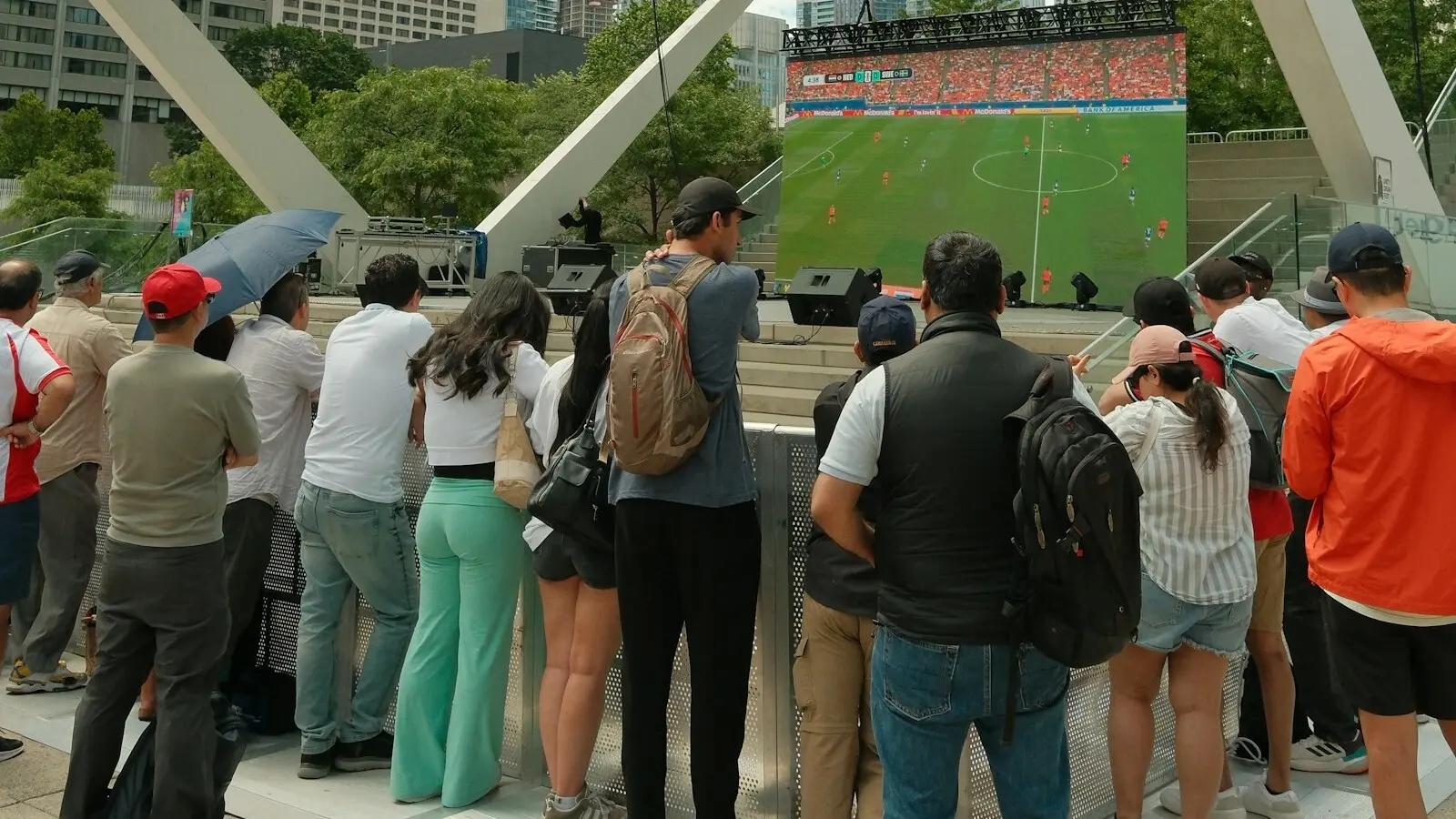
A viewing audience provides context; a media proposal still needs evidence for the placements being purchased. Illustrative photograph. Photo: Trista Le / Unsplash.
On October 5, Reuters reported Nielsen Sports data showing a 20% increase in Premier League viewing among U.S. adults aged 18–34 early in the season. That is useful context for a brand considering soccer. It does not tell the brand how many relevant people a particular campaign will reach.
A proposal might combine publisher content, social distribution, newsletter placements and an event presence. The buying decision is whether those specific components can serve your objective—and whether the evidence is strong enough to support the investment.
Define the audience before reviewing the sales deck
Write a short audience brief before comparing partners. Specify the U.S. markets you need to serve, the customers you want to reach, the language requirements and the action you want people to take.
“Soccer fans” is too broad for a brand trying to support distribution in two cities. It may also be too broad for an organization seeking corporate hospitality buyers rather than consumer awareness.
Use the brief to separate essential requirements from preferences. A national brand may accept broad U.S. reach with limited local detail. A regional business may need credible evidence from particular markets. An English-language campaign and a bilingual campaign also require different creative and distribution decisions; do not infer language preference from a fan’s team allegiance.
This step gives the seller a useful problem to solve. It also makes it easier to reject impressive numbers that do not answer your buying question.
Ask what each number actually measures
Request a definition, geography, reporting period and source for every audience number used to support the proposal.
| Claim in the proposal | What the buyer needs to establish |
|---|---|
| A large soccer fan base | Whether this measures declared interest, actual viewing or something else, and which population was studied. |
| A strong broadcast audience | The named competition, platforms, reporting period and whether the figure is average audience or unique viewers. |
| A large social following | Which accounts are included, where followers are located and what comparable sponsored posts actually delivered. |
| Forecast campaign impressions | Which paid and organic placements contribute, how the forecast was built and what is guaranteed. |
| Unique campaign reach | How people are deduplicated across the included placements and where overlap remains unknown. |
These figures cannot be added into one defensible total merely because they appear in the same deck.
Google’s Unique Reach definition illustrates why: several impressions can come from one person encountering an ad on different devices. Its measurement applies within its specified system; it does not establish that a publisher can deduplicate every channel in a bespoke package.
Where cross-channel deduplication is unavailable, ask for separate channel results and a clear limitation. That is more useful than a combined “reach” figure whose calculation cannot be explained.
Keep the geography attached to the evidence
Country and city detail matters when the objective depends on where customers live or buy.
Nielsen’s public 2026 fan-report page describes research spanning Canada, Mexico and the United States. That scope can inform a regional discussion. A North American finding should not silently become a U.S.-only finding, much less a forecast for one city.
Apply the same discipline to a seller’s own data. Ask for the U.S. share of the relevant audience, the period measured and the source of that breakdown. If local detail is unavailable, record it as unavailable. Do not estimate a city audience by multiplying percentages from unrelated surveys and platform reports.
For a digital placement, distinguish the geography of the publisher’s total audience from the geography that the purchased distribution can target and report. A global audience may still be useful, but its value depends on the brief rather than its size alone.
Separate audience evidence from purchased delivery
A strong editorial platform does not automatically make every commercial package effective. Ask the seller to turn its offer into a placement schedule.
For each component, identify the format, channel, dates, frequency, creative responsibilities, distribution support and reporting owner. Clarify whether paid amplification is included, optional or funded separately. If a package includes an article or video, ask how people will be brought to it.
Keep three things distinct:
- Historical results: what comparable work delivered, including its dates, spend and format.
- Forecasts: what the seller expects this campaign to deliver, with its assumptions.
- Agreed deliverables: what the proposal actually commits to supplying.
An organic social post can be an agreed deliverable without its eventual audience being guaranteed. A guaranteed impression quantity still needs the targeting, placement and reporting definitions attached. Ask how underdelivery or a schedule change would be handled before signing off.
Do not treat a media placement as permission to use league, club or player assets in your own advertising. Have the seller identify the permissions included and any separate approvals required.
Compare the full assignment, not only the media fee
Bring competing proposals into one comparison sheet: target audience, inventory, distribution, evidence, reporting, complete cost and unresolved questions.
Include the creative production and adaptation the campaign needs. Record who supplies footage, edits, translations, landing pages and approval coordination. Identify any separate spending needed to distribute the content or measure the agreed outcome.
Avoid comparing two impression-based prices as though the underlying inventory were identical. A lower quoted cost may cover a different market, a different format or substantially less work. Equally, a more elaborate package needs a reason for every extra component.
Consider a hypothetical regional consumer brand comparing a global soccer publisher with a smaller local outlet. The global publisher’s headline audience is larger. The local outlet offers clearer evidence from the target market. Neither wins automatically: the brand should compare the relevant inventory, audience evidence and full execution cost against its objective. Missing local data is a decision risk, not proof that the global audience has no value.
Set a decision gate before the campaign starts
Choose the evidence that would justify continuing, changing or stopping the activity. For an awareness brief, that may include delivery within the target market and an agreed reach or frequency measure. For an inquiry brief, it may include attributable visits and qualified responses.
Keep those stages separate. Delivered impressions, visits, inquiries and sales answer different questions. A tracked response is useful evidence, but does not by itself establish that the campaign caused incremental sales.
If the audience case is promising but incomplete, consider a limited pilot with a defined budget, period, creative scope and reporting deadline. Agree what the pilot can realistically resolve. It should not be sold internally as proof of long-term commercial impact before results exist.
The final buying recommendation should state what is supported, what is assumed and what remains unknown. A proposal is easier to approve responsibly when those distinctions are visible.
Turn the proposal into a clear brief
SGN’s sponsorship and partnership services include opportunity assessment, audience fit and activation planning. If your team is comparing a soccer media or sponsorship proposal, share the opportunity with SGN alongside your target markets, objective, timing and budget guidance. An agreed consulting scope can focus on the audience evidence, proposed deliverables and questions to resolve before committing.
For related planning context, read how soccer broadcast changes affect brand media planning.
SGN VIEW
The final buying recommendation should state what is supported, what is assumed and what remains unknown.