
Talent Booking & Event Strategy
What Should a Soccer Star Actually Do at Your Event?
The value of a soccer-talent appearance depends on assigning the person a role that fits the audience, event objective, format, and operating plan before the booking is made.

A company has decided that a soccer personality could improve its event.
The next question is often, “Who can we book?”
There is a more important decision to make first: what should the person actually do?
A keynote, moderated conversation, customer reception, media interview, promotional appearance, and skills demonstration are different assignments. They place different demands on the talent, organizer, production team, budget, and audience.
Recent Premier League activity in North America illustrates the range. BizBash reported that the league’s August 2026 opening-weekend program included former-player appearances across watch parties and local events. Andy Cole participated in a question-and-answer session at a Manchester United gathering in New York. Robbie Fowler threw a ceremonial first pitch at a Boston Red Sox game. Tony Dorigo joined a Leeds United event in San Francisco alongside Joe Montana. BizBash’s event coverage
These were different uses of recognizable personalities within a wider event program. The reporting does not disclose booking arrangements or demonstrate commercial results. It does show why “soccer star appearance” is not a sufficiently precise brief.
For brands, event organizers, corporate hospitality buyers, and production agencies, the talent’s role should follow the business purpose of the event.
Start with the result the event needs
A recognizable guest can perform several commercial functions.
The person might help attract invited customers, provide a reason for media interest, lead a substantive conversation, create campaign content, or improve an experience for supporters and employees.
Those objectives are related, but they are not interchangeable.
A company seeking deeper relationships with twenty important customers may need a private, well-moderated conversation. An organizer trying to maintain energy across a full-day program may need an experienced host. A brand developing digital content may need an effective on-camera performer rather than a traditional speaker.
Before discussing names, define what should be different because the talent participated.
That statement might be:
- Priority customers should have a substantive experience unavailable through an ordinary hospitality invitation.
- The audience should better understand a business or leadership subject through the talent’s experience.
- The event should produce an agreed set of usable content assets.
- A public activation should give participants an appropriate way to interact with a respected soccer figure.
- The talent should help connect a brand initiative with the sport in a credible way.
A role can then be designed around that result.
Different assignments create different requirements
The following comparison provides a starting point:
| Talent role | Potential purpose | Principal delivery question |
|---|---|---|
| Moderated guest | Insight, storytelling, and customer engagement | Who will lead the conversation, and what preparation is required? |
| Keynote speaker | A structured point of view for a larger audience | Can the talent deliver the required subject and format effectively? |
| Host or emcee | Program continuity, energy, and audience guidance | Can the person manage scripts, transitions, timing, and live changes? |
| Hospitality participant | Direct interaction with selected guests | How will access, introductions, photographs, and guest expectations be managed? |
| Content contributor | Video, audio, social, or campaign production | What will be captured, approved, distributed, and reused? |
| Demonstrator or clinic participant | Active soccer participation or instruction | What operational, safety, facility, and staffing support is required? |
| Publicity participant | Interviews, press activity, or a launch moment | What is the media proposition, and which subjects are approved? |
One person may perform several roles. Each role should still be specified separately.
Agreement to speak onstage does not automatically include a customer reception afterward. Participation in a private event does not automatically include press interviews. Permission to record a conversation does not necessarily authorize the client to use it in paid advertising.
The event brief should distinguish the requested activities before the parties confirm the engagement.
A moderated conversation often provides greater flexibility
A keynote is a familiar corporate-event format, but it is not automatically the best use of a soccer personality.
Some current and former players are experienced speakers who can develop and deliver a structured presentation. Others are more effective in conversation, responding to informed questions and drawing on specific experiences.
A moderated format can connect the person’s background with the client’s subject without requiring the talent to perform as a conventional keynote speaker.
It can also give the organizer greater control over pace and relevance. The moderator can move between career stories, leadership, international experience, team culture, media, commercial partnerships, or another agreed theme.
That control depends on preparation.
The moderator should understand the audience, the event objective, and the talent’s public record. Questions should be discussed in advance, particularly when the conversation involves sensitive professional subjects, current competitions, former employers, commercial relationships, or personal matters.
The objective is not to remove spontaneity. It is to create the conditions for a useful conversation.
A keynote requires more than a recognizable name
A keynote places the talent in a different role.
The audience expects a coherent presentation with a beginning, a developed idea, and a conclusion. A successful playing career does not by itself establish that someone wants to or can deliver that format.
Before commissioning a keynote, determine:
- Whether the talent has delivered comparable presentations.
- Which subjects the person is prepared to address.
- Whether the presentation will be original or based on existing material.
- How long the person is expected to speak.
- Whether slides, video, translation, or other production support are required.
- How audience questions will be handled.
- What preparation or rehearsal is included.
The subject should connect with the speaker’s real experience. A former player can discuss preparation, team dynamics, competition, relocation, leadership, recovery, or working across cultures when those subjects genuinely fit their background.
The client should avoid assigning the person an abstract business thesis simply because it matches the conference agenda.
A credible personal perspective is usually more valuable than a generic corporate presentation delivered by a famous individual.
Hosting is an operating responsibility
Hosting or emceeing an event can appear lighter than delivering a keynote. In practice, it may require more sustained performance.
A host must manage transitions, introduce participants, follow timing instructions, respond to production cues, maintain audience attention, and adjust when the program changes.
A soccer personality may be an excellent choice when the event requires credibility with the audience and the person has suitable live-broadcast or presentation experience.
The buyer should still examine the complete assignment:
- Total time on duty.
- Rehearsal and briefing requirements.
- Script and pronunciation review.
- Interviews or audience interaction.
- Sponsor acknowledgments.
- Live production communication.
- Contingency material for delays.
- Wardrobe and branding requirements.
- Language and translation support.
“Host the evening” is not an adequate scope.
If the talent is expected only to welcome guests and introduce one segment, describe that limited role. If the person will carry a three-hour live program, the proposal and production plan should reflect that responsibility.
Hospitality requires an access plan
Corporate hospitality often depends on the perceived opportunity for personal interaction.
That expectation needs to be managed carefully.
A client inviting twenty senior customers to a private dinner can create a controlled experience. A public reception involving hundreds of guests presents a different operating challenge, even if both are described as a meet-and-greet.
The plan should establish:
- The number and type of guests.
- The approximate time available for interaction.
- Whether the format involves a conversation, reception, individual photographs, group photographs, or autographs.
- How guests will be introduced.
- Whether products or personal items may be presented for signing.
- Which photography is permitted.
- How security and guest movement will be managed.
- What happens when attendance or timing changes.
The talent should not arrive to discover a different access expectation from the one described during booking.
The client also needs to avoid promising every guest an extended private interaction when the schedule cannot support it. A well-managed, limited experience will usually create more value than a larger program defined by waiting, confusion, and disappointed expectations.
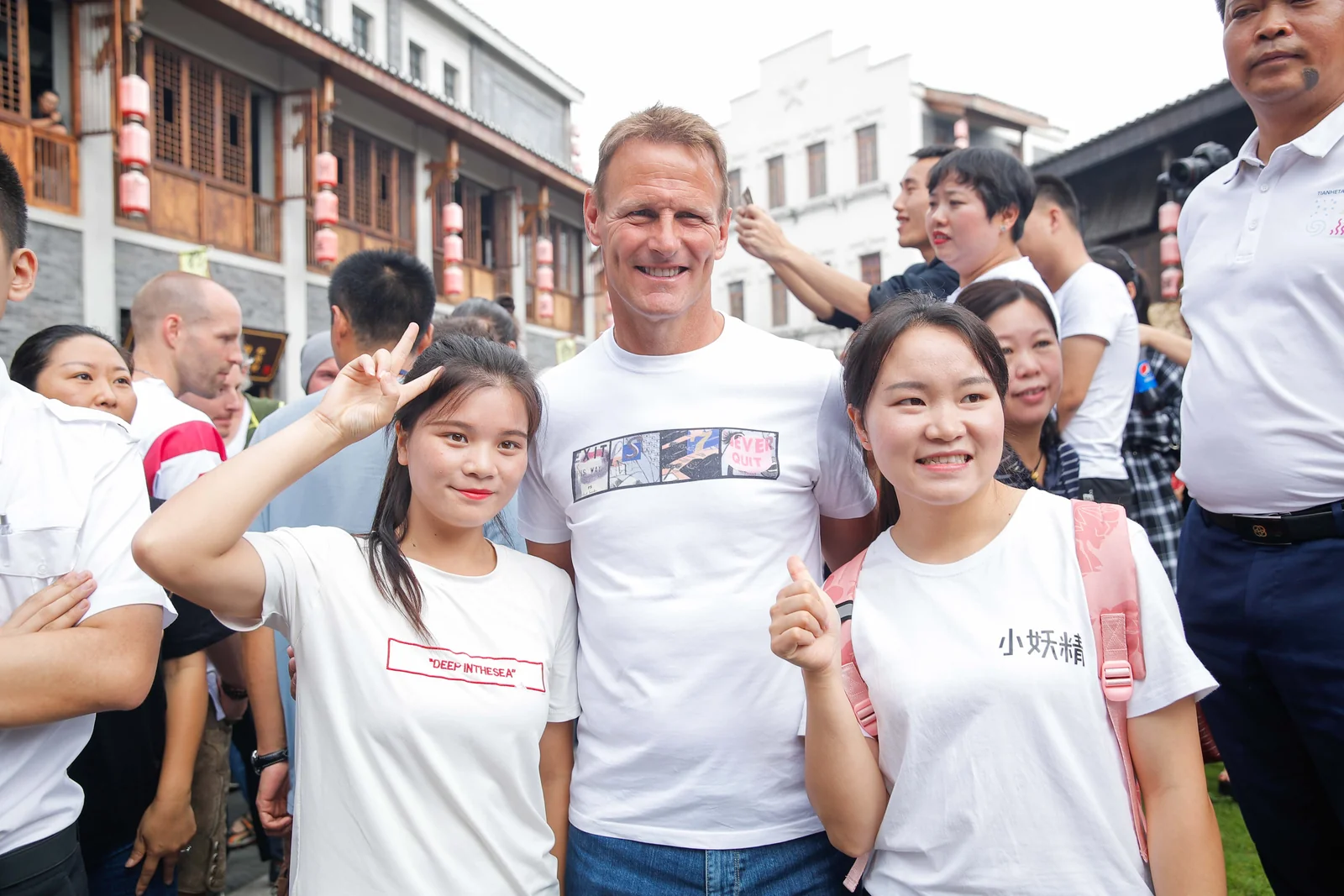
Content production is a separate workstream
A live appearance can also provide an opportunity to produce interviews, campaign films, social videos, photography, or internal communications.
That work should not be added informally on the event day.
Content production creates its own requirements:
- Creative treatment and scripts.
- Additional talent time.
- Location and technical needs.
- Hair, makeup, wardrobe, or styling.
- Product presentation.
- Interview preparation.
- Editing and approval.
- Channels, territory, and duration of use.
- Paid advertising and talent-owned distribution.
- Translation, subtitles, and alternate versions.
The most efficient arrangement may place content capture close to the event. That does not make it part of the live appearance automatically.
A thirty-minute filming session can require substantial preparation and may create a more commercially valuable asset than the appearance itself. It should be proposed and contracted accordingly.
SGN’s related article, A Soccer Talent Booking Is Also a Rights Agreement, addresses the permissions required when an engagement includes recording, editing, advertising, and reuse.
Publicity needs an editorial reason
The presence of a recognized soccer figure can support publicity, but it does not guarantee coverage.
A production team should determine what the person can credibly discuss and why an outlet’s audience would care. The media proposition might relate to an event, campaign, product, community initiative, tournament, or relevant professional experience.
The plan should identify:
- The intended outlets.
- Interview format and duration.
- Approved subjects.
- Questions or areas that are outside scope.
- Whether interviews are live or recorded.
- Any agreed review of quotations or supplied materials, recognizing that independent editorial outlets may not offer prepublication approval.
- How the event and brand will be identified.
- What happens if an interview is canceled or changed.
Publicity activity should also fit the talent’s contractual obligations and current professional circumstances.
A press program designed after the booking may discover that the requested interviews, subjects, or timing were never included.
Active soccer formats require specialist delivery
A clinic, demonstration, or on-field challenge can give the audience a more direct connection with the talent’s sporting background.
It also introduces practical requirements that do not exist in a stage conversation.
The organizer may need an appropriate playing surface, equipment, supporting coaches, participant registration, medical provision, insurance review, changing facilities, security, weather planning, and safeguarding procedures.
The talent’s role must be realistic. A former player may be comfortable demonstrating technique and speaking with participants without being responsible for running an entire coaching program.
Current players may face additional restrictions connected with their employer, competitive schedule, health, or equipment relationships.
The program should be designed and operated by qualified personnel. A recognizable participant can strengthen the activity, but should not be expected to compensate for an incomplete delivery plan.

Combining roles can increase value and complexity
A buyer may want one engagement to include a customer reception, stage interview, social content, press activity, and public appearance.
Combining roles can be efficient when they serve one coherent objective and the schedule allows each activity to be delivered properly.
It can also create an overextended program.
Every addition affects preparation, talent time, movement, approvals, production, and the possibility of delay. The client should decide which element is essential and which ones are optional.
A useful scope might define:
- The primary assignment.
- One or two supporting activities.
- The time allocated to each.
- The conditions required for delivery.
- Activities that are expressly excluded.
This gives the buyer a program it can approve and the representative a request that can be evaluated.
Build the run of show around the contribution
The talent should not be treated as an isolated block dropped into an existing program.
The surrounding event needs to prepare the audience, support the activity, and provide an appropriate transition afterward.
For a moderated conversation, that may mean a short introduction, a capable interviewer, controlled questions, and a clear conclusion. For hospitality, it may mean a private arrival, a structured welcome, and an orderly photography period. For filming, it means a prepared set and approved materials before the talent’s call time.
Cvent’s event-production guidance treats objectives, budget, venue, technical delivery, rehearsals, staffing, and contingency planning as connected parts of production. The specific requirements of a soccer-talent engagement will vary, but the underlying point is relevant: the audience-facing moment depends on the system supporting it.
A famous guest cannot repair an unclear agenda, unprepared moderator, unsuitable room, or unrealistic schedule.
Evaluate the role rather than the name alone
Measurement should reflect what the person was booked to do.
| Assignment | Relevant evidence |
|---|---|
| Moderated conversation or keynote | Attendance, audience response, message recall, and agreed stakeholder feedback |
| Hospitality | Attendance by priority guests, quality of interaction, and appropriate commercial follow-up |
| Hosting | Program delivery, audience participation, and effectiveness of live transitions |
| Content production | Completion of agreed assets, approval, distribution, and response from the intended audience |
| Publicity | Completed interviews, appropriate coverage, and communication of the intended subject |
| Demonstration or clinic | Safe delivery, participation, participant response, and completion of the planned activity |
A crowd photographing the talent may indicate attention. It does not necessarily establish that the business objective was achieved.
Likewise, a small private event may create significant value if it was designed for a limited group of important customers and produced the intended conversations.
The evaluation should follow the assignment approved before the booking.
Consulting can precede the booking
Some buyers know exactly whom they want. Others have a business objective, event date, and audience but remain uncertain about the right role or talent profile.
In the second situation, approaching names immediately may produce proposals for an underdeveloped assignment.
A short consulting engagement can help establish:
- The event’s commercial purpose.
- The appropriate talent role.
- The required level of recognition or experience.
- A workable format and schedule.
- The necessary booking, production, hospitality, and content support.
- The information required to approach prospective talent.
- The decision criteria for comparing responses.
That work can lead to a booking brief or show that a different event format would use the budget more effectively.
The purpose is not to delay the inquiry. It is to make the inquiry answerable.
Define the job before selecting the person
A soccer personality creates interest because of who they are and what they have done.
The event creates value through what the person is asked to contribute.
A useful booking brief therefore begins with the audience, objective, and assignment. It explains the format, requested activities, time commitment, location, production environment, intended publicity, and any content requirements.
That clarity improves the discussion with representatives and gives the buyer a better basis for comparing options.
Discuss a talent booking or event scope
SGN provides international soccer talent booking and specialist consulting for brands, agencies, event organizers, and corporate buyers.
Share the event location, date or date range, intended audience, business objective, and the role you are considering. SGN can help develop the assignment, identify suitable talent profiles, coordinate a booking inquiry, and define the supporting campaign or event work.
Discuss your soccer-talent engagement with SGN.
Availability, fees, representation status, and engagement terms require confirmation for the specific brief. An inquiry does not reserve talent.
SGN VIEW
Select the role before selecting the name. The strongest talent engagement gives a soccer personality a specific, credible job within an event designed to use that contribution well.