
Sponsorship & Market Strategy
Choosing the Right Entry Point Into Women’s Soccer Sponsorship
Brands should evaluate women’s soccer through the specific relationships they need—club, league, athlete, media, or product collaboration—rather than treating the entire category as one sponsorship opportunity.
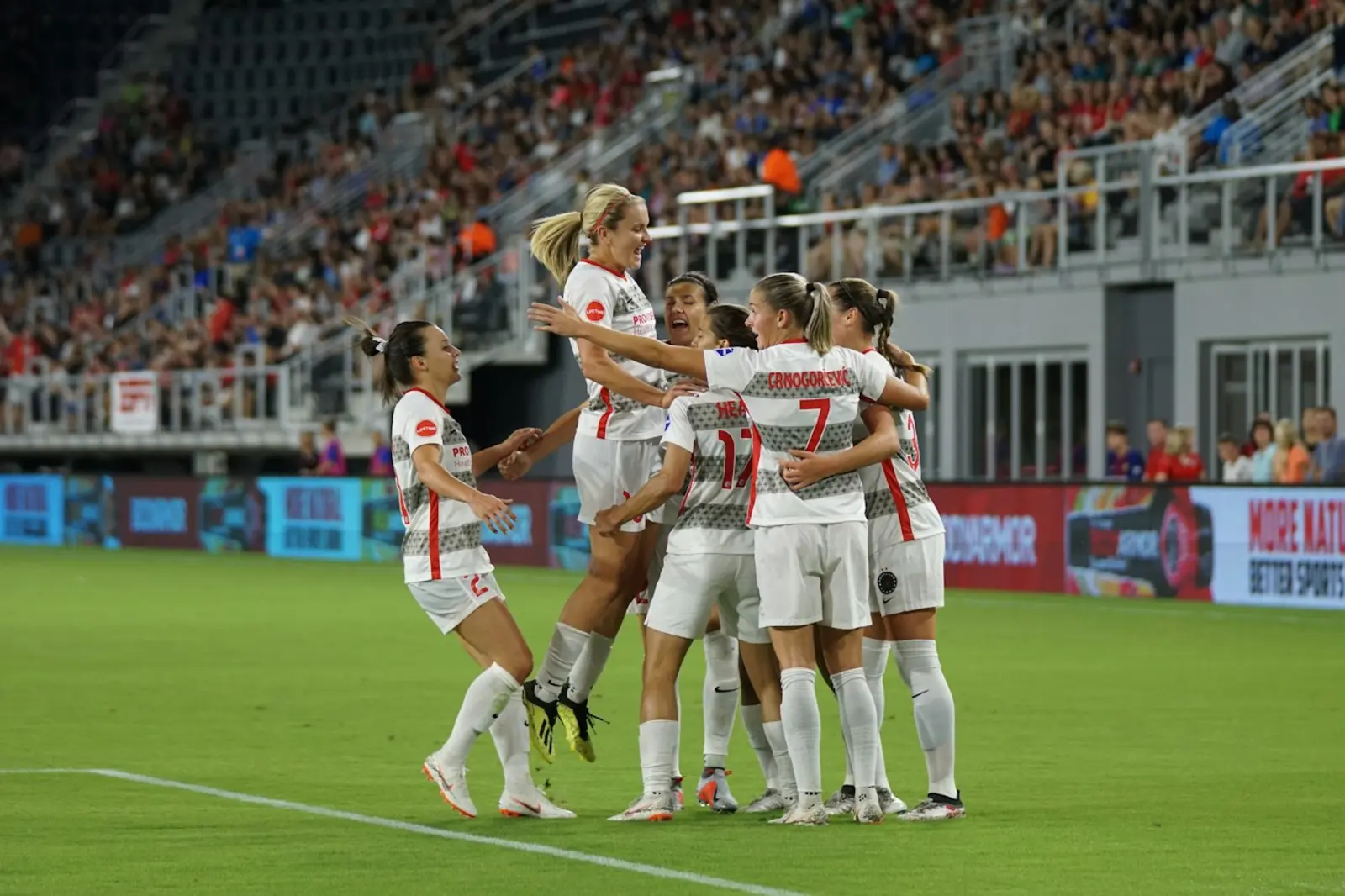
A decision to invest in women’s soccer still leaves an important question unanswered: where should the brand participate?
The choice might involve a club, league, player, competition, publisher, community program, or licensed product. Each provides different opportunities. They also require different budgets, operating capabilities, and measures of success.
Recent announcements illustrate that variety.
On September 3, 2026, London City Lionesses announced a multiyear front-of-shirt partnership with Nike that includes community activation and support for research and development for female athletes. The parties separately extended their technical partnership for four years beginning in the 2027–28 season. The announcement does not disclose a sponsorship fee. London City’s announcement
In the United States, e.l.f.’s March 13 announcement described a different structure: an NWSL relationship supported by individual athlete partnerships, matchday activity, community initiatives, and a collaboration with SoccerGirl. These are announced program elements, not independently verified campaign results. e.l.f.’s 2026 program
A third route appeared in April, when the NWSL announced a TOGETHXR apparel collection with league and club editions. That announcement describes a product collaboration rather than simply another advertising placement. NWSL’s collection announcement
The strategic lesson is not that one arrangement is superior. It is that “women’s soccer sponsorship” describes several different commercial decisions.
Start with the relationship the business needs
A regional company seeking customer relationships has a different requirement from a national brand launching a product.
The regional company may benefit from repeated activity in one market: customer invitations, employee participation, local content, and a credible connection with the community. A national launch may require coordinated distribution across several cities, a recognizable campaign lead, and a broader media plan.
Neither should begin by selecting the most prominent available logo placement.
First define the intended audience, the desired response, and where the company can serve the resulting demand. Then identify the relationship that makes that response possible.
A useful initial comparison looks like this:
| Entry point | Potential commercial role | Question to resolve |
|---|---|---|
| Club | Recurring local engagement and experiences | Does the club reach people in the brand’s operating market? |
| League or competition | A coordinated association across multiple markets | Which local assets and activation opportunities are actually included? |
| Athlete | A distinctive voice, performance, or creative role | Does the person fit the audience and proposed assignment? |
| Media or content partner | Distribution and sustained storytelling | What audience and delivery commitments can be demonstrated? |
| Product collaboration | A tangible customer proposition | Do demand, distribution, permissions, and economics support the product? |
These are planning distinctions, not fixed rules. A program may combine several routes, but each should have a defined job.
Give women’s soccer its own audience brief
Do not assume that a women’s team has the same audience as a men’s team sharing its name, city, or ownership.
Equally, do not assume that the audience consists only of women, families, or young players.
The relevant evidence should describe the particular property and the people the brand wants to reach. Ask about attendance, audience geography, viewing behavior, repeat engagement, and the source and age of the available research.
Keep the measures separate. Ticket purchasers, match attendees, social followers, and television viewers are not interchangeable groups. Their overlap may be substantial, limited, or unknown.
For a regional business, the useful question may be how many engaged people live within its service area. For an international company, it may be whether the property can reach U.S. customers in the languages and channels its campaign requires.
Broad enthusiasm for women’s sports cannot replace that work. It can justify investigation; it does not establish audience fit.
Compare complete programs, not isolated rights fees
A lower rights fee can still lead to an expensive campaign if the brand must separately purchase distribution, production, staffing, and local delivery.
A larger agreement can also be inefficient if much of its inventory serves markets or audiences the company does not need.
Ask each prospective partner to respond to the same commercial brief. Compare what a complete program would require, including the brand’s own resources.
The assessment should distinguish among:
- Rights and permissions.
- Production and creative development.
- Media and distribution.
- Event delivery and staffing.
- Talent participation.
- Measurement and account management.
The aim is not to force every proposal into an identical format. It is to expose the difference between the assets purchased and the work required to use them.
The London City announcement is useful here because it identifies several dimensions of the relationship. It should not be used as a pricing benchmark for a U.S. club or an unrelated category.
Decide whether the brand needs one market or several
A national relationship can provide a coherent platform. It does not automatically make nationwide activation the right first step.
A company with limited local staff may be better served by a focused program in selected markets. Conversely, separately negotiating several club arrangements can create unnecessary complexity when the brand genuinely needs coordinated league-level participation.
The decision should follow the company’s distribution and operating footprint.
Consider a hypothetical consumer brand introducing a product through retailers in two cities. A national sponsorship might create awareness beyond the places where customers can purchase it. A narrower combination of local activity, relevant talent, and paid distribution may create a more useful test.
That conclusion would change if national retail availability were imminent or if the company had a separate objective requiring wider recognition.
Geographic scope should therefore be a deliberate choice, not a proxy for ambition.
Treat athlete participation as a distinct investment
A player can make a campaign more recognizable, engaging, or credible. That contribution should be defined independently of the team or league agreement.
Determine whether the assignment needs a performer, storyteller, host, demonstrator, or ongoing ambassador. Review comparable work and the evidence of relevance to the intended audience.
Then establish which services and uses can actually be agreed.
Club marks, match footage, individual endorsements, personal-channel posts, and filmed appearances should not be assumed to arrive together. The parties need to confirm the permissions and approvals relevant to the proposed work.
The practical lesson from a layered program such as e.l.f.’s is not to accumulate as many relationships as possible. It is to give each relationship a purpose that the others cannot fully perform.
Build the creative around a credible contribution
Supporting the growth of women’s soccer can be a legitimate brand commitment. It is not, by itself, a finished consumer proposition.
What will the company do that people can experience?
The answer might involve a useful product, an engaging content format, better event access, a recurring customer experience, or a clearly defined community contribution.
Avoid treating empowerment language as a substitute for an idea. The audience should be able to understand the connection between the company, its offering, and the activity it supports.
A product collaboration requires particular discipline. An attractive design does not establish demand, and a licensing agreement does not solve manufacturing, fulfillment, returns, or customer acquisition.
Before committing, identify who is expected to buy, where the product will be available, and why the collaboration adds value beyond placing two names together.
Distinguish an established operation from a development opportunity
Some partnerships provide access to an operating property with a delivery history. Others involve a new team, venue, event, or program still being built.
Neither is inherently the better choice.
An established operation may offer more evidence about attendance, staffing, and sponsor delivery. A development opportunity may offer greater influence over a program’s design, but it also introduces assumptions that need to remain visible.
Ask what exists now, what is contracted, what is planned, and what depends on future approvals or investment.
If the partnership relies on a new facility or launch milestone, connect the activation plan to confirmed readiness. Do not schedule a customer promise around an aspiration presented as a completed asset.
This distinction is particularly important when a brand is attracted by the idea of becoming an early partner. Early participation can have value, but only if the company understands what it is helping build.
Make the first commitment answer a business question
A first investment should produce evidence useful to the next decision.
For a club program, that could mean determining whether customers attend and return. For an athlete campaign, it could mean testing whether the creative improves brand association among the intended audience. For a product collaboration, it could mean examining demand, contribution margin, and repeat purchasing.
Choose a limited number of outcomes and establish the baseline before launch.
Do not use a property’s overall growth to imply that the brand’s own investment worked. Equally, do not dismiss a focused program because its total reach is smaller than that of a national campaign.
The appropriate comparison is with the job the investment was intended to perform.
Build from the right starting relationship
Women’s soccer presents several credible ways for brands to participate. The commercial task is to select and connect them deliberately.
A club can provide local continuity. A league can support coordinated scale. An athlete can strengthen a creative idea. A media partner can help distribute it. A product can give the audience something useful to purchase or use.
A brand does not need every element at once.
It needs a clear objective, a relevant audience, the necessary permissions, an executable program, and evidence that will inform its next commitment.
SGN VIEW
Choose the relationship your business needs to build, then buy the rights and delivery required to support it. The strongest entry point is the one your organization can use well.